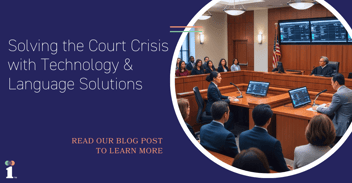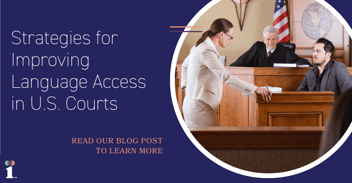
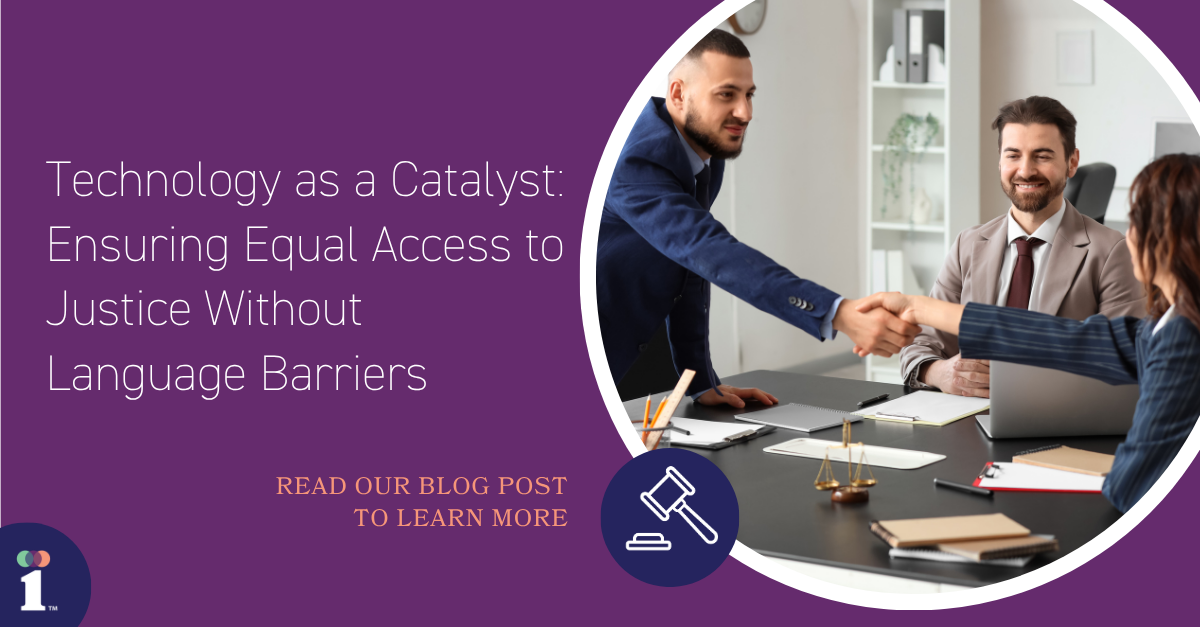
In the modern justice system, the ability to communicate effectively is more than a logistical requirement; it is a fundamental pillar of due process. Today, approximately 25.7 million people in the United States — nearly 9 percent of the total population — have limited English proficiency (LEP), meaning they struggle to read, write, speak, or understand English well enough to navigate critical systems without assistance. That number has grown by more than 80 percent since 1990. When these individuals encounter the legal system, the stakes could not be higher: when a language barrier exists between a court and a participant, the integrity of the legal proceeding itself is compromised.
Despite this reality, the Brennan Center for Justice found that 46 percent of states still fail to require that interpreters be provided in all civil cases, and 80 percent do not guarantee that courts will cover the cost of interpretation services. Ensuring that every individual, regardless of the language they speak, has the same opportunity to understand and be understood is the core mission of language access initiatives.
To explore the solutions to these challenges, Interprenet hosted an in-depth forum featuring Kate Accetti, Senior Sales and Account Manager at Interprenet, and Adam Lofredo, Vice President of CTI’s Justice Division. With over 25 years of experience in the industry, Adam shared insights into how the intersection of specialized courtroom technology and professional language services is fundamentally changing how courts operate and serve the public.
The Scale of the Challenge
The language access gap in U.S. courts is not a future problem — it’s an urgent, present one. Over 350 languages are spoken in American households, yet the supply of certified court interpreters has been declining for years. In California alone, the nation’s largest state court interpreter workforce shrank from 799 employees in 2021–22 to just 717 in 2023–24. In that same fiscal year, there were more than 377,000 Spanish-language interpretation events in California courts alone — but only 1,310 certified Spanish interpreters were available to cover them.
💡Nationally, federal courts reported that nearly 20 percent of proceedings involving non-English speakers experienced delays due to interpreter shortages in 2022.
The root causes of this gap are structural. Courts face an aging and retiring interpreter workforce, severe geographic constraints that concentrate interpreters in urban centers, and a rigorous certification process that limits how quickly new interpreters can enter the field. For rare and indigenous languages — including Mixteco, Mam, and K’iche’ — the shortage is even more acute, with demand growing exponentially while credentialed interpreters remain nearly impossible to source locally.
These aren’t just logistical inconveniences. When the Brennan Center for Justice examined interpretation services across 35 states, they found that 37 percent of states don’t even require the use of credentialed interpreters when they are available — leaving LEP individuals at risk of communicating through family members, opposing counsel, or even, in documented cases, the other party in a protective order hearing.
The Pressure to Modernize Language Services
The cost of these failures is real and measurable. Inadequate or absent interpretation leads to inaccurate court records, delays, unenforceable orders, and overturned judgments. Cases involving LEP defendants, witnesses, or petitioners have been documented where miscommunication — not the merits — drove the outcome.
And as the legal industry continues its digital transformation (with 85 percent of litigators now using electronic court filings according to the American Bar Association’s 2024 Legal Technology Survey), the pressure to modernize language access infrastructure alongside these broader upgrades has never been greater.
These challenges are often amplified in high-volume regions. A representative in a court in a high-volume county shared that they rely on these partnerships to scale their Spanish-language support when staff interpreters reach capacity, as well as to provide essential coverage for Languages of Lesser Diffusion (LLDs) that are difficult to source locally.
Watch the Full Discussion
If you missed the live session or wish to revisit the technical insights shared by Kate and Adam, you can watch the full 30-minute recording below.
The Digital Transformation of the Courtroom
For years, the legal industry was known for its reliance on traditional, paper-based, and strictly onsite workflows. However, the demand for greater efficiency and broader accessibility has sparked a necessary digital transformation. According to the ABA’s 2024 Legal Technology Survey, 73 percent of law firms now use cloud-based legal tools, and most state courts have begun implementing statewide language access programs, remote video technology, and centralized interpreter databases.
The partnership between technologists and language service providers is now at the center of this evolution. By integrating high-quality audio and video infrastructure with Remote Simultaneous Interpretation (RSI) platforms, courts can now secure highly qualified, certified linguists regardless of their physical location.
This shift does more than just solve a scheduling problem; it ensures that specialized cases, which may require rare languages or specific legal dialects, are no longer delayed by a lack of local resources. The technology acts as a bridge, bringing the expert to the courtroom instantly. The practical impact of this bridge is particularly significant for remote jurisdictions.
💡A court official in a remote county in Illinois noted that because of their isolated location, RSI has enabled them to provide comprehensive language access within a limited budget.
In the past, they had to source in-person interpreters from as far away as St. Louis, Missouri; now, they can provide the same level of service without the logistical hurdles and costs of in-person travel.
Operational Efficiency: Removing the "Friction"
One of the primary roadblocks in legal proceedings is "logistical friction”, the time and cost lost to managing disparate systems or multiple vendors. The forum highlighted the importance of a seamless interface where the hardware in the room and the human expertise behind the screen work in perfect tandem.
-
Streamlined Workflows: When interpretation is integrated directly into the courtroom’s technical infrastructure, the process becomes "plug-and-play." There are less downtime and fewer technical interruptions, allowing judges and counsel to focus on the case.
-
Significant Cost Savings: By utilizing remote solutions, courts can drastically reduce the travel expenses, mileage reimbursements, and multi-hour minimums typically associated with onsite interpretation.
-
Unyielding Reliability: In a courtroom, every syllable matters for the record. Advanced technology ensures that audio quality remains crystal clear, preventing the “muffled” or distorted audio that can lead to transcript errors or appeals.
This is not a minor concern: when interpretation quality is poor, the consequences can include overturned judgments, negative credibility findings based on miscommunication rather than testimony, and wrongful outcomes that only come to light on appeal — if at all. Research on immigration courts has found that structural language access gaps have contributed to negative findings in cases where the issue was communication failure, not the underlying merits of the case.
Focusing on the "End-User": The Citizen
While the technical specifications of a "Justice Division" are impressive, the ultimate measure of success is the experience of the individual entering the courtroom. Whether it is a defendant, a witness, or a family member, their perception of the justice system is shaped by their ability to participate fully.
Adam Lofredo noted during the forum that when technologists and linguists do their jobs well, it directly benefits the "customers" of the court:
"When a citizen can walk into a room and immediately receive clear, professional interpretation through a reliable system, the technology becomes invisible. The result is a more equitable, transparent experience that builds public trust in the legal system."
Access to Justice Without Barriers
The collaboration between Interprenet and technology leaders like CTI is driven by a singular goal: access to justice.
With at least 13 million LEP individuals living in states that do not require courts to provide interpreters in most civil cases, and millions more living in states that charge for those services, the language access gap is not marginal — it is systemic. Removing language barriers ensures that a person’s native language never dictates their ability to navigate the legal system.
As we look toward the future, the focus at Interprenet remains on our Human-to-Human (H2H) philosophy. While technology provides the engine and the reach, it is the professional interpreter’s expertise and empathy that ensures a fair process. By leveraging the right technology, courts can transition to a model where language access is no longer a challenge to be solved, but a high standard that is consistently met for every person, every time.
The evolution of the justice system lies in this balance of innovation and human-centric service. By integrating the right tools with the right experts, we can ensure that language is never a barrier to fairness.
To learn more about how Interprenet supports the legal industry with specialized interpretation and technology solutions, visit our legal services page or contact us today.